

Holy Water and Grape Bricks — How God (and a Few Creative Lies) Saved American Wine
Vine & Wander | The Wineries That Survived Prohibition
On January 17, 1920, the United States government did something that would have seemed unthinkable to every Italian, French, and German immigrant who had spent the previous half-century planting vineyards across California: it outlawed their livelihood entirely.
The 18th Amendment and its enforcing legislation, the Volstead Act, prohibited the manufacture, sale, and transportation of any beverage containing more than half of one percent alcohol. On the eve of Prohibition, California alone had 713 bonded wineries, more than 120,000 acres under vine, and an industry worth tens of millions of dollars annually. By the time it was over, thirteen years later, fewer than 200 wineries remained. The rest were gone, their equipment sold for pennies, their vineyards torn up and replanted with prunes and pears by farmers who needed to eat.
But some survived. And the story of how they did it involves the Catholic Church, a Frenchman who saw it all coming, wine compressed into bricks with warning labels that winked so hard they practically fell over, the most creative theology American rabbis never actually practiced, and one Napa Valley winery quietly supplying Al Capone’s speakeasies by rail from Chicago.
Pull up a chair. This one earns the glass.
The Man Who Saw It Coming
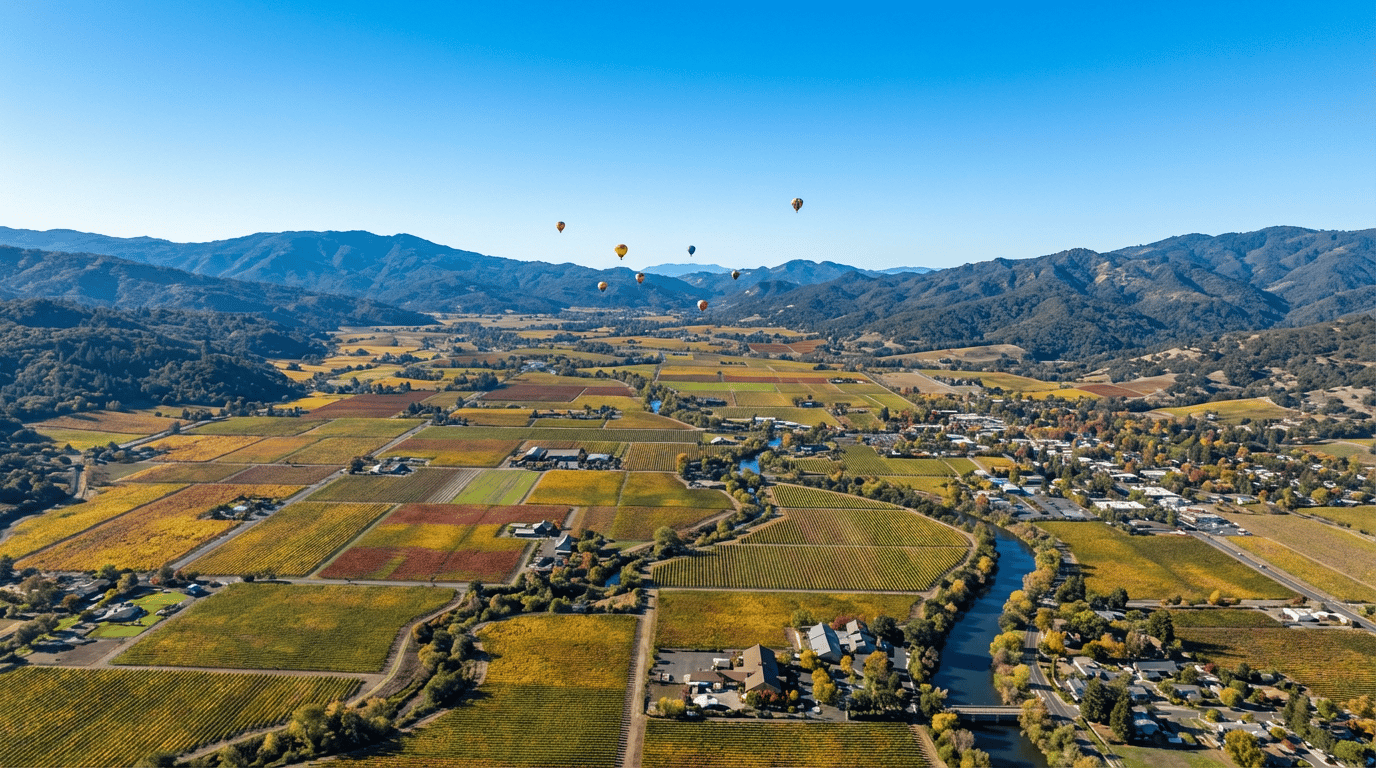
Georges de Latour was a French chemist from the Dordogne region who arrived in California in 1883 with a cream of tartar business and eventually found his way to Napa Valley by 1900. His wife Fernande reportedly exclaimed “quel beau lieu” when they first saw the land in Rutherford, which translates roughly as “what a beautiful place,” and that became the name of their vineyard. Beaulieu. BV. One of the most storied names in American wine.
De Latour was, by every account, a man of uncommon foresight. He watched the temperance movement gather momentum for years before the 18th Amendment passed, and he began cultivating a relationship with the Catholic Church well before most winemakers had started to worry. His wife Fernande had strong ties to the diocese of San Francisco, and de Latour used those connections deliberately and intelligently. By 1908, Beaulieu was already producing wine for church use. By the time Prohibition struck in 1920, de Latour had secured a nationwide permit allowing him to produce altar wines for the Church across the country.
While neighboring vineyards shuttered and sold their equipment at whatever price they could get, de Latour did the opposite. He bought it and expanded. He acquired failing wineries for pennies on the dollar, shipping his barrels marked “FLOUR” to protect them in transit, and by the end of Prohibition his business had grown fourfold. Beaulieu remained the national supplier of sacramental wines to the Catholic Church until 1978. The winery that survived on holy wine went on to produce some of the most celebrated Cabernet Sauvignon in American history.
Today, Beaulieu Vineyard sits at 1960 St. Helena Highway in Rutherford, Napa Valley. Tasting is available by appointment, and the Georges de Latour Private Reserve Cabernet, still bearing the founder’s name, remains one of the benchmarks of Napa winemaking.
The Saint and the Speakeasy
On the opposite end of California, in Los Angeles, an Italian immigrant named Santo Cambianica founded the San Antonio Winery in 1917, three years before Prohibition began. At the time, there were roughly 90 wineries in the Los Angeles area. When Prohibition ended in 1933, six were still standing.
Cambianica’s survival strategy was not complicated. His winery was named for a Catholic saint. He was himself a devout Catholic with deep ties to the local parish. When Prohibition arrived, the Archdiocese of Los Angeles needed a reliable source of sacramental wine, and San Antonio Winery was, in name, spirit, and relationship, the obvious choice. The deal was struck. The winery kept making wine. Before Prohibition, San Antonio produced roughly 5,000 cases of red per year. When repeal came in 1933, that number had grown to 20,000 cases.
San Antonio Winery is still operating today, and it has the remarkable distinction of being the last winery to operate within the city of Los Angeles. It is also the largest supplier of sacramental wine in the United States, continuing the practice that saved it over a century ago. Steve Riboli, great-nephew of the founder and longtime vice president of the winery, has described it simply: “We were a faith-based company. Literally.”
The winery at 737 Lamar Street in Los Angeles is open for tastings and tours, and their story is worth an afternoon of your time.
The Warning Label That Winked
Not every winery had the foresight of de Latour or the clerical connections of Cambianica. Some found their survival in a different kind of creative reading of the law.
The Volstead Act contained a provision that allowed the legal production of “non-intoxicating” fermented beverages at home, up to 200 gallons per household per year. The intention was to protect the vinegar and grape juice industries. What it actually did was create a booming market for something called the wine brick.
Beringer Vineyards, founded in 1876 in St. Helena and still one of Napa’s most beautiful estates, stayed alive during Prohibition partly through sacramental wine sales and partly through the wine brick trade. The Beringer Grape Brick was a block of concentrated grape juice sold as “non-alcoholic juice production.” Each brick came with printed instructions that included a remarkable warning: “After dissolving the brick in a gallon of water, do not place the liquid in a jug away in the cupboard for twenty days, because then it would turn into wine.”
Read that again. The warning was actually the instruction manual.
Nobody in government seemed particularly motivated to challenge the logic, and wine bricks sold by the millions. Varieties that could hold up to the month-long freight journey from California to eastern cities became the priority, which is part of why the thick-skinned, deeply colored Alicante Bouschet grape became oddly dominant during Prohibition. The delicate Pinot Noir and Chardonnay that California would later build its reputation on could not survive the trip as a brick. Alicante Bouschet could. This is one of the quieter, stranger ways Prohibition shaped American wine for decades after it ended, by putting inferior but durable grapes in the ground at the exact moment the industry’s future direction was being decided.
Beringer is now one of the most visited wine estates in Napa Valley, offering tastings in their 1876 Rhine House mansion.

Irish Rabbis and the Fraud That Grew Too Large to Hide
The sacramental wine loophole was not exclusive to Catholics. The Volstead Act extended the same exemption to Jewish religious practice, where wine plays an equally essential ceremonial role. Local synagogues were permitted to obtain wine for sacramental purposes, and rabbis were authorized to certify that need.
The problem was definitional. Catholic priests had institutional structure. A rabbi, in the early 20th century in America, was anyone who said they were a rabbi. And once that became clear to the general public, the results were predictably creative.
Jewish congregations in San Francisco grew from roughly 80 families to 900 families between 1920 and 1921 alone. Synagogue membership across the country exploded as ordinary citizens discovered that belonging to a congregation created access to wine. The number of practicing rabbis grew by a similar factor. A Senate committee investigation in 1926 found that hundreds of thousands of gallons of wine were being distributed by what its counsel described, memorably, as “fictitious rabbis.” The committee’s report noted, to the apparent bewilderment of investigators, “There are Irish rabbis and rabbis of every description.”
The Conference of Jewish Organizations formally condemned the practice and vowed to suppress the activity of “pseudo rabbis,” but the fraud had grown too entrenched and too useful to contain. By the time the government cracked down with tighter regulations on sacramental wine permits, the legitimate religious communities had been penalized at least as much as the fraudulent ones. It was, as Prohibition tended to be, a solution that created more problems than it addressed.
Al Capone’s Wine Supplier
Not every winery that kept its lights on during Prohibition was doing so entirely within the law, and nowhere is this illustrated more vividly than at Pope Valley Winery in the northeastern hills of Napa.
Pope Valley Winery was founded in 1897 as the Burgundy Winery and Olive Oil Factory by a Swiss farmer named Ed Haus. His son Sam, during his military service in the early 1900s, befriended a young man from Chicago. That connection, once Prohibition arrived, became the winery’s lifeline. The Haus family began quietly producing wine and transporting it by horse cart down to Napa, where it boarded a train to Chicago to be served in Al Capone’s speakeasies and brothels.
The winery officially appeared to have ceased production during Prohibition, which made it somewhat easier to explain why they were able to reopen so swiftly once repeal came. Nobody asked too many questions. The underground railroad of California wine flowing to Capone’s Chicago operations was one of the better-kept open secrets of the Prohibition era, until it wasn’t, at which point the family decided the risk was no longer worth the reward and quietly stopped.
Pope Valley Winery still operates today in the quiet hills northeast of Napa. It is a small, unassuming place, and all the better for it. The Capone connection is not heavily marketed but is not exactly hidden either.
America’s Oldest Winery and the 500,000 Bottles It Was Waiting to Open
Far from California, in the Hudson Valley of New York, the oldest continually operating winery in the United States was playing its own long game.
Brotherhood Winery in Washingtonville, New York, was founded by a French Huguenot named Jean Jaques, who dug his first underground cellars in 1839. Those cellars still exist, hand-cut into the rock beneath the property, and they are still in use today. Brotherhood survived Prohibition the same way many of its California counterparts did, by pivoting to sacramental and medicinal wines under new ownership. What makes their Prohibition story particularly satisfying is its ending.
When Prohibition was repealed on December 5, 1933, Brotherhood released its stock of 1915 champagne, wines that had been cellared quietly for nearly two decades, waiting. The number was approximately 500,000 bottles. Imagine the corks being pulled on that particular day, all at once, in the stone cellars beneath the Hudson Valley hillside.
The winery’s recorded history notes, with evident amusement, that the clergy population in the Washingtonville area grew substantially during the thirteen years of Prohibition. They don’t say exactly how substantially, but the implication is clear enough.
Brotherhood claims another distinction worth noting: the Farrell family, who took ownership during Prohibition and guided the winery out the other side, are credited with essentially inventing wine tourism as an American concept, beginning to offer visitor facilities and tours in the postwar era before the practice was common anywhere.
Brotherhood Winery at 100 Brotherhood Plaza Drive in Washingtonville, New York, is open for tours and tastings year-round. Their underground cellars alone are worth the trip.
What Prohibition Left Behind
When repeal finally came in December 1933, the damage to American wine was not immediately visible but proved lasting. Of the 713 California wineries that existed in 1920, fewer than 200 survived. The expertise that had been accumulated over decades walked out the door with the winemakers who found other professions and never came back. The vineyards that produced Cabernet Sauvignon, Pinot Noir, and Chardonnay had largely been ripped out and replaced with hardier, less distinguished varieties. The state that Prohibition left California’s wine country in — total hectares of Cabernet Sauvignon below 325 acres, Chardonnay down to barely 120 acres — made the rebuilding process a matter not of years but of generations.
The quality wines California eventually produced, the ones that would stun French judges at a blind tasting in Paris in 1976, were built on the slow, painstaking replanting of what Prohibition had destroyed. The winemakers who made that possible were working, often without realizing it, to finish what a Frenchman named Georges de Latour had started in Rutherford in 1900, the quiet, persistent belief that California could make wine worth taking seriously.
He was right, of course. It just took a lot longer than it should have. And it required a fair number of people to become, briefly and creatively, men of the cloth.
Planning Your Prohibition Wine Trail
Several of the wineries that survived this era are still open and deeply worth visiting. A few suggestions for building your own pilgrimage.
Napa Valley is the natural anchor, with Beaulieu Vineyard in Rutherford and the Beringer Rhine House in St. Helena both offering historic settings alongside serious wine. Allow at least a full day. The valley is compact but the tasting rooms are numerous, so pace yourself. Summer weekends are crowded. Spring and fall weekdays are the sweet spot.
Los Angeles often surprises visitors who don’t know San Antonio Winery exists. Tucked into an industrial neighborhood in Lincoln Heights, it is the most improbable but most historically resonant stop on any Southern California wine itinerary. They offer tours that walk through the winery’s full history, including the Prohibition years.
Hudson Valley, New York is anchored by Brotherhood Winery and is increasingly surrounded by a genuine regional wine scene. The underground cellars at Brotherhood are among the most atmospheric spaces in American wine, and the train from New York Penn Station to Salisbury Mills-Cornwall puts you within a short drive of the property. Allow a weekend and explore the broader Hudson Valley wine trail while you’re there.
Taste the History
Ready to explore these legendary vineyards yourself? Discover the best exclusive tastings and guided tours in the region.
Book Napa & Sonoma Tours on ViatorTasting room hours and reservation requirements change seasonally. Always confirm directly with the winery before visiting. Featured wineries: Beaulieu Vineyard, San Antonio Winery, Beringer Vineyards, Pope Valley Winery, Brotherhood Winery.