
The World Is Coming To Your Backyard. A Guide To The 2026 FIFA World Cup
June 11 – July 19, 2026 · USA, Canada & Mexico · 48 Teams · 104 Matches
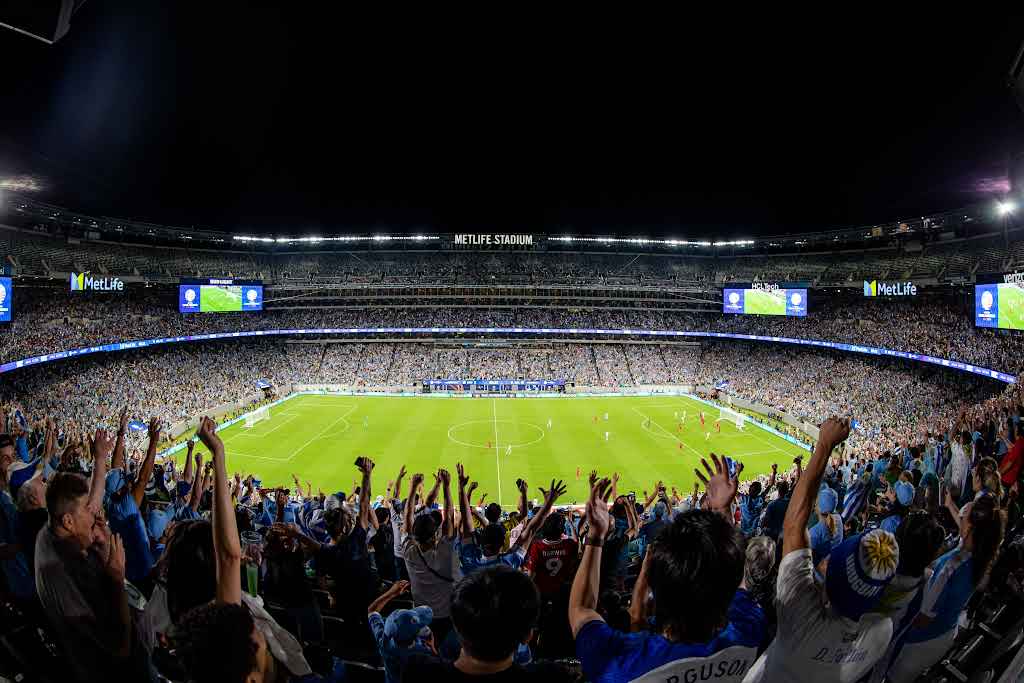
Once every four years the entire planet stops and watches the same thing. No other event comes close, not the Super Bowl, not the Olympics, not anything. And this summer, for the first time in history, three nations are sharing that honour. The 2026 FIFA World Cup kicks off on June 11th at the legendary Estadio Azteca in Mexico City and doesn't stop until July 19th, when the final whistle blows at MetLife Stadium in New Jersey with the whole world holding its breath. Sixteen host cities. Forty-eight nations. One hundred and four matches. This isn't just a tournament. It's the largest World Cup ever staged, and it's happening right here in North America.
For the traveling fan, the logistics are unlike anything that came before. The United States alone hosts eleven cities: Los Angeles, Miami, Atlanta, Dallas, Houston, Seattle, Philadelphia, Boston, Kansas City, the San Francisco Bay Area, and the New York metropolitan area. Canada brings Toronto and Vancouver. Mexico adds Guadalajara, Monterrey, and Mexico City. FIFA has divided the continent into three geographic regions — Western, Central, and Eastern — so fans can realistically follow their team through multiple group stage matches without crossing an ocean between games. Road-tripping the Western bracket from LA up to Seattle for back-to-back group stage matches? That is a summer story worth telling for the rest of your life.
This guide is built around the three moments that matter most: where it begins, where the tournament finds its full heart, and where it ends. Mexico City for the opening. Miami for the mid-tournament fire. New York and New Jersey for the Final.
The Opening: Mexico City — June 11
There is a reason the tournament begins here. Estadio Azteca is the only stadium in history to have hosted two FIFA World Cup Finals, in 1970 and 1986, and on June 11th it becomes the first stadium in history to host three World Cup opening ceremonies. That is not a marketing claim. That is 87,000 people in the building where Pelé lifted the trophy, where Maradona scored the Hand of God, and where this summer's story begins.
Mexico City sits at 2,240 meters above sea level, which is higher than most visitors expect. Arrive at least two days before any match. Drink water from the moment you land. Skip the alcohol on your first night. The altitude fatigue that catches travelers off guard in the first 24 to 48 hours is real, and missing kickoff because your head is pounding is not how this trip should start.
The stadium logistics. Estadio Azteca sits in the southern part of the city in the Santa Úrsula district of Coyoacán. The surrounding roads, particularly Calzada de Tlalpan and Periférico, become parking lots when 87,000 people exit at once. Do not rent a car. Take the Metro Line 2 to Tasqueña station and connect to the Tren Ligero light rail directly to the stadium. Uber and Didi are widely available and affordable in Mexico City, but on match days build in 90 minutes of travel time minimum and do not rely on rideshare for the return trip. Leave from Tasqueña.
Where to Stay in Mexico City
The honest choice comes down to what kind of trip you want. If you are here purely to get to the stadium and back, staying in Tlalpan or Coyoacán puts you close to the Tren Ligero with shorter commutes. If you want to actually experience Mexico City between matches — and you should — the neighborhoods of Polanco, Condesa, and Roma Norte are where the city's best restaurants, cafes, nightlife, and street life live.
- Luxury tier: The Four Seasons Mexico City on Paseo de la Reforma is the city's benchmark luxury property. It announced a dedicated 2026 World Cup shuttle service from the hotel directly to the stadium. The St. Regis Mexico City on the same boulevard is the alternative for travelers who want the full luxury experience.
- Mid-range: The Camino Real Polanco and Presidente InterContinental Mexico City are both well-located in Polanco with reliable infrastructure, English-speaking staff, and proximity to the neighborhood's restaurant scene.
- Practical: Coyoacán itself, the neighborhood directly surrounding the stadium, has smaller hotels and apartments that make the post-match logistics genuinely simple. You will be home in twenty minutes regardless of what time the match ends.
What to Do Between Matches
Mexico City has more than 150 museums, a historic center built on top of ancient Aztec ruins, and neighborhoods that reward slow walking and no agenda. The essentials, in order of importance:
- The Zócalo and Templo Mayor put you at the heart of what this city actually is. The massive main plaza is surrounded by the Metropolitan Cathedral and the ruins of the Templo Mayor, the great Aztec pyramid excavated right in the city center.
- The National Museum of Anthropology in Chapultepec Park is one of the finest museums in the world. The collection of pre-Columbian artifacts and the famous Aztec Sun Stone all live here. Allow half a day minimum.
- Coyoacán is the neighborhood surrounding the stadium and one of the most beautiful corners of Mexico City. The Frida Kahlo Museum — La Casa Azul — is here, and it is as extraordinary as its reputation.
- Roma and Condesa are where you eat, drink, and walk. Mezcal bars, bookstores, art deco architecture, and the Mexico City that people come back for.
- Teotihuacán is an hour northeast. The Pyramids of the Sun and the Moon are among the most significant archaeological sites in the Americas. Go early.
The Middle: Miami — June 15 to July 18
Miami is hosting seven matches at Hard Rock Stadium across the entire tournament, including group-stage games featuring Brazil, Portugal, Uruguay, and Colombia, plus a Round of 32, a Quarterfinal, and the Bronze Final on July 18. No other American city outside New York has more at stake during the knockout rounds, and no other host city will have more international fan energy in its streets.
Hard Rock Stadium sits in Miami Gardens, about 15 miles north of downtown. On a normal day that is 20 to 35 minutes by car. On match day with 65,000 fans converging, plan for 45 to 75 minutes and never assume a rideshare will be waiting when you exit. The smartest transport option in Miami is the Brightline train from Miami Central Station to Aventura Station, then the Stadium Connect shuttle to the venue. Fixed price, no surge, no guesswork.
The official FIFA Fan Festival runs at Bayfront Park in Downtown Miami for the full tournament — free to enter, with massive screens, live music, and international food from every nation in the draw. Thirty thousand people. Waterfront. Non-stop from June 15. You do not need a ticket to have a genuinely great day in Miami during this tournament.
Get Your World Cup Tickets
Official tickets for every match — secure, guaranteed
Where to Stay in Miami
- Miami Beach is where the international fan energy will be loudest. Brazilian supporters, Portuguese fans, and South American travelers will fill South Beach for the full tournament. The Faena Hotel Miami Beach is the landmark luxury address, with oceanfront suites and Forbes Five-Star service. The St. Regis Bal Harbour Resort offers beachfront luxury with a calmer atmosphere.
- Brickell offers a smarter balance for fans attending multiple matches. The EAST Miami in Brickell is the most consistently recommended hotel for World Cup travelers — walkable dining, Metrorail access, and a 35 to 45 minute match-day commute. The SLS LUX Brickell adds trendier energy with in-house nightlife.
- Near the stadium: The Hilton Aventura is the closest major hotel to Hard Rock Stadium, roughly 20 minutes in normal traffic. For fans attending multiple matches who want zero logistics stress on game days, it is the practical choice.
What to Do Between Matches in Miami
Miami's appeal between matches is not subtle. Ocean Drive and the Art Deco Historic District on South Beach are the postcard version of the city, worth experiencing once. Wynwood is the more interesting afternoon — a neighborhood that turned industrial warehouse space into one of the most significant street art destinations in the world. The Wynwood Walls are the centerpiece, but the galleries, restaurants, and bars in the surrounding blocks are the real reason to spend an afternoon there.
Little Havana along Calle Ocho is where the city's Cuban heritage lives most visibly — the ventanitas serving cafecito and Cuban sandwiches, the domino players at Maximo Gomez Park. El Farolito and Versailles are both institutions worth eating at. For the beach days between matches, nothing beats a morning on the sand at South Beach before the crowds arrive.
The Final: New York / New Jersey — July 19
MetLife Stadium in East Rutherford, New Jersey hosts the World Cup Final on July 19th. The stadium holds 82,500 fans, making it one of the largest venues in the entire tournament, and on the day of the Final it will be the most watched piece of real estate on the planet. Tickets for the Final start at just over $2,000 for the lowest tier. If you are coming to New York to be in the city when the world watches — that is also entirely worth doing. Every bar, every screen, every rooftop in Manhattan will be showing it.
Getting to MetLife. Do not drive. NJ Transit runs the Meadowlands Rail Line directly from Penn Station to the stadium on match days in approximately 30 minutes. This is the correct answer for Final day. Arrive two to three hours early for knockout matches and enjoy the pre-match experience rather than fighting traffic.

Official Match Ball
adidas FIFA World Cup 26™ Trionda Soccer Ball
$34.98 with Prime
View on Amazon →Where to Stay for the Final
- Manhattan (recommended): Any hotel within walking distance of Penn Station puts you on the direct NJ Transit Meadowlands Rail Line. The Crowne Plaza HY36 Midtown is less than 5 minutes on foot from Penn Station with unusually spacious rooms. The Knickerbocker Hotel at Times Square sits one minute from Penn Station with one of the best rooftop bars in Midtown — exactly where you want to be after the Final whistle.
- Luxury Manhattan: The Ritz-Carlton New York, NoMad is a 10-minute walk to Penn Station with a 50th-floor bar and José Andrés dining. The Hotel Edison Times Square is the value-conscious option — a historic Art Deco property 15 minutes from Penn Station.
- Near the stadium: The Hampton Inn Carlstadt sits directly across the highway from MetLife — as close as you can get without camping in the parking lot. Free breakfast, on-site parking, and the NJ Transit 163 bus stops at the front door. The Hyatt Regency Jersey City on the Hudson offers PATH train access into Lower Manhattan, waterfront dining, and Manhattan skyline views.
What to Do While You're in New York
The World Cup Final is on a Sunday. Most international fans will be in New York for at least three to four days around that weekend. Central Park is 843 acres in the middle of Manhattan, and the lawn areas will be alive with informal fan gatherings during Final week in a way the city rarely experiences. The High Line, the elevated park built on a former rail line on Manhattan's west side, runs from the Meatpacking District to Hudson Yards — one of the most pleasant walks in the city. From the southern end you can see the New Jersey shore across the river, and on a clear evening the distance to the stadium is surprisingly comprehensible.
For a genuine New York meal before the Final: Joe's Pizza on Carmine Street in the West Village is the standard by which New York pizza is measured, and a slice there the evening before the Final is a small, specific thing that will sit well in your memory.
Traveling in Mexico: What You Need to Know Before You Go
Mexico City is one of the great cities on earth and will be an extraordinary host for the World Cup. It is also a city where knowing a few things in advance makes a genuine difference in how smoothly your trip goes.
- Advisory context: The U.S. State Department currently carries Mexico under a Level 2 advisory — the same level assigned to France, Germany, and the United Kingdom. The neighborhoods where visitors will spend their time during the tournament — Polanco, Condesa, Roma Norte, and Coyoacán — are well-patrolled and considered among the safer areas in the city.
- Transportation is the most important safety variable. Do not hail taxis off the street. Use Uber or Didi exclusively. Before getting into any vehicle, confirm the driver's name, license plate, and vehicle model in the app. This takes ten seconds and is worth doing every time.
- Do not rent a car. Mexico City traffic is already among the most complex in North America. On match days a rental car becomes a very expensive liability.
- Keep valuables out of sight. Pickpocketing and phone snatching in crowded areas are the most common issues. Use a money belt for your passport and extra cash.
- Enroll in STEP. The Smart Traveler Enrollment Program at step.state.gov registers you with the nearest U.S. Embassy. Five minutes. Costs nothing. Every American traveling to Mexico should do this.
Entering the United States: What International Visitors Need to Know in 2026
The United States is hosting the majority of this tournament, and the welcome at the stadiums will be genuine. The entry process at the border and airports, however, operates under a significantly different environment than it did four years ago — international visitors should understand the current landscape before they travel.
- Check your visa and ESTA status now. Visa Waiver Program travelers need a valid ESTA authorization before boarding. Apply at esta.cbp.dhs.gov at least 72 hours before departure. If your passport has changed since your last ESTA, you need a new one.
- Travel restrictions apply. As of January 1, 2026, a Presidential Proclamation restricts or fully suspends entry for nationals of a significant number of countries. Verify your specific status at travel.state.gov well in advance if you or anyone traveling with you may be affected.
- Biometric screening applies to all non-U.S. citizens, including Canadian visitors. CBP collects facial biometric data from all non-citizens at entry and exit. Expect this at every port of entry.
- Secondary inspection is more common. If sent to secondary inspection, remain calm, answer questions honestly, and do not argue. Coming prepared with accurate, consistent documentation remains the most reliable path through any port of entry.
The Rest of the Map
Sixteen cities means that wherever your team is playing, there is a host city worth building a trip around. A few worth knowing:
- Los Angeles (SoFi Stadium, Inglewood) — one of the tournament's premium venues. The K Line Metro connects downtown LA to Inglewood. Use it on match days.
- Dallas (AT&T Stadium, Arlington) — hosts a semifinal. The Joule and Rosewood Mansion on Turtle Creek are the high-end anchors in Dallas for the tournament.
- Seattle (Lumen Field) — the most walkable World Cup venue in the tournament. Steps from Pike Place Market and the waterfront. If your team draws Seattle group stage matches, this is one of the better pure travel experiences available.
- Toronto (BMO Field) — Canada's largest city during a summer sporting event of this scale will be extraordinary. The waterfront, neighborhoods, and food scene are all worth building time around beyond the matches.
Need To Know
- ⚽ Opening Match: June 11 · Mexico vs. South Africa · Estadio Azteca, Mexico City
- 🏆 Final: July 19 · MetLife Stadium, East Rutherford, New Jersey
- 🇺🇸 US Host Cities: LA · Miami · Dallas · Houston · Atlanta · Seattle · Philly · Boston · KC · SF Bay Area · NY/NJ
- 🇨🇦 Canada: Toronto · Vancouver
- 🇲🇽 Mexico: Mexico City · Guadalajara · Monterrey
- 🎟️ Tickets: Via FIFA.com only. Final tickets start above $2,000. Only buy through official channels.
- 🏔️ Mexico City altitude: 2,240 meters. Arrive two days early. Hydrate on arrival.
- 🚂 Stadium transport: Tren Ligero to Azteca · Brightline to Aventura + shuttle to Hard Rock · NJ Transit from Penn Station to MetLife
Grab Your Spot Before The Whistle Blows
Plan Your World Cup Trip →Ticket purchasing for all matches is exclusively through FIFA.com. Hotel prices for World Cup dates are subject to significant demand increases. Book refundable rates early and confirm closer to match confirmation. Always verify transportation options directly with your host city's transit authority as schedules and shuttle services will be finalized as the tournament approaches.